

Eyüp Sultan Tomb Restoration, Istanbul
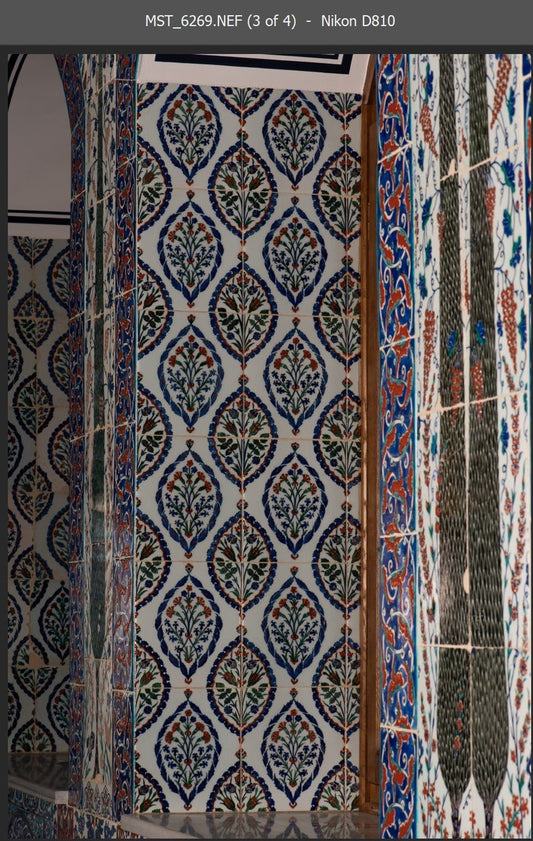
The Eyup Sultan Mausoleum Istanbul restoration involved İznik Mavi Çini in the reproduction of missing tiles on the mausoleum’s wall panels. Conducted in collaboration with Anikya, the project was carried out with reference to the existing tile layout and historical surface conditions. All reproduced Iznik tiles (traditional ceramic tiles produced in the Iznik tradition) were developed to align with the original architectural surfaces of the mausoleum.


Why was restoration required at the Eyup Sultan Mausoleum?
Over time, missing and detached tiles were identified on the mausoleum’s wall surfaces. The restoration aimed to address these losses and preserve the original tile continuity.
What was İznik Mavi Çini’s role in this project?
İznik Mavi Çini was responsible for producing the missing tiles used on the wall panels. All production followed principles of material and visual consistency.
Were color studies conducted during the restoration process?
Yes, different red clay color tones were developed within İznik Mavi Çini’s R&D unit. Selected tones were used on the restoration tiles to match the historical surfaces.
How long did the restoration take?
The restoration was carried out in phases over a three-year period. The project was completed at the end of 2015.
Over time, missing and detached tiles were identified on the mausoleum’s wall surfaces. The restoration aimed to address these losses and preserve the original tile continuity.
What was İznik Mavi Çini’s role in this project?
İznik Mavi Çini was responsible for producing the missing tiles used on the wall panels. All production followed principles of material and visual consistency.
Were color studies conducted during the restoration process?
Yes, different red clay color tones were developed within İznik Mavi Çini’s R&D unit. Selected tones were used on the restoration tiles to match the historical surfaces.
How long did the restoration take?
The restoration was carried out in phases over a three-year period. The project was completed at the end of 2015.
×
❮
![Project image]() ❯
❯
You May Also Like Collections


Request a quote for a similar project
We make handmade Iznik tiles in custom sizes and patterns for hotels, restaurants, mosques, residences and corporate spaces. Fill in the form and our team will get back to you.