

Iznik Museum Iznik Tile Panel
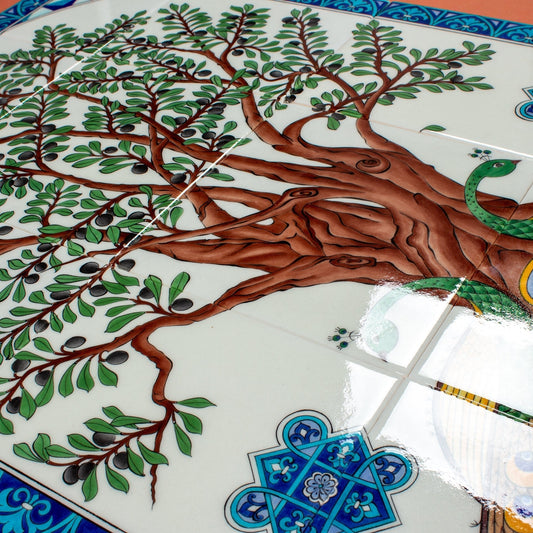
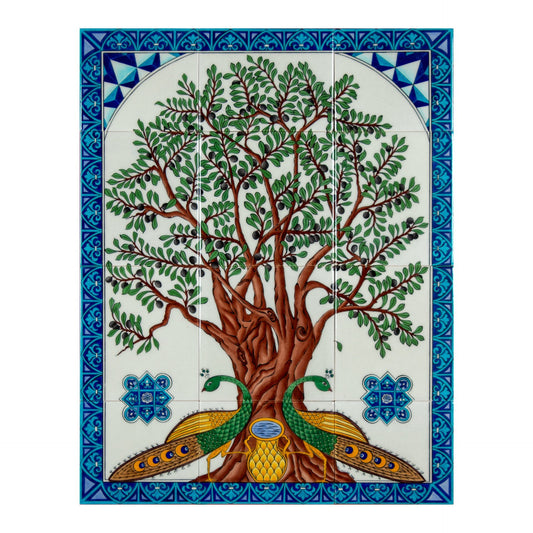
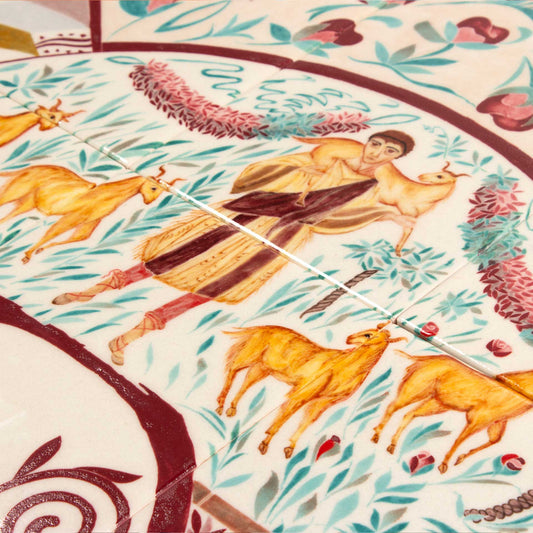
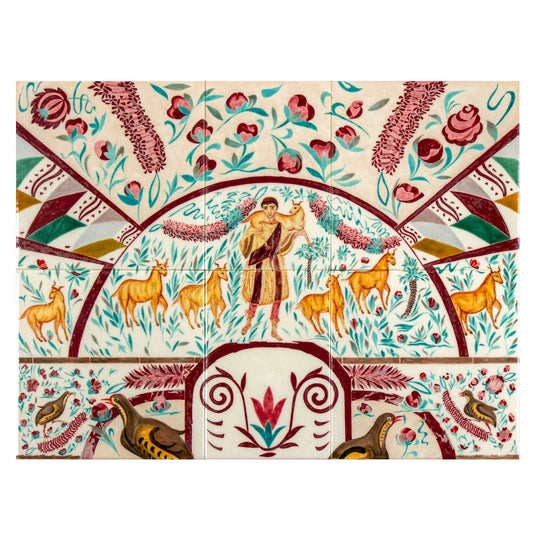
This special Iznik tile panel, located at the entrance of the Iznik Archaeology Museum, which opened in 2022, makes the city’s multilayered history visible through an architectural surface language. Produced by İznik Mavi Çini, the panel was designed as a monumental focal point welcoming visitors at the museum entrance and presents Iznik’s cultural heritage through a contemporary composition.


Who made the tile panel at the entrance of the Iznik Museum?
The 235 × 300 cm Iznik tile panel at the entrance of the Iznik Archaeology Museum, opened in 2022, was produced by İznik Mavi Çini; it was designed by Serap Ereyli.
What does the tile panel at the Iznik Museum depict?
An olive tree stands at the center of the panel. At its roots are peacock and water-of-life motifs referring to Iznik's early Christian period, and the borders carry the meander pattern of Roman art.
What does the olive tree on the Iznik Museum panel symbolize?
The olive tree, which holds an important place in Iznik's historical and cultural memory, represents continuity and rootedness on the panel.
The 235 × 300 cm Iznik tile panel at the entrance of the Iznik Archaeology Museum, opened in 2022, was produced by İznik Mavi Çini; it was designed by Serap Ereyli.
What does the tile panel at the Iznik Museum depict?
An olive tree stands at the center of the panel. At its roots are peacock and water-of-life motifs referring to Iznik's early Christian period, and the borders carry the meander pattern of Roman art.
What does the olive tree on the Iznik Museum panel symbolize?
The olive tree, which holds an important place in Iznik's historical and cultural memory, represents continuity and rootedness on the panel.
×
❮
![Project image]() ❯
❯
You May Also Like Collections
Request a quote for a similar project
We make handmade Iznik tiles in custom sizes and patterns for hotels, restaurants, mosques, residences and corporate spaces. Fill in the form and our team will get back to you.